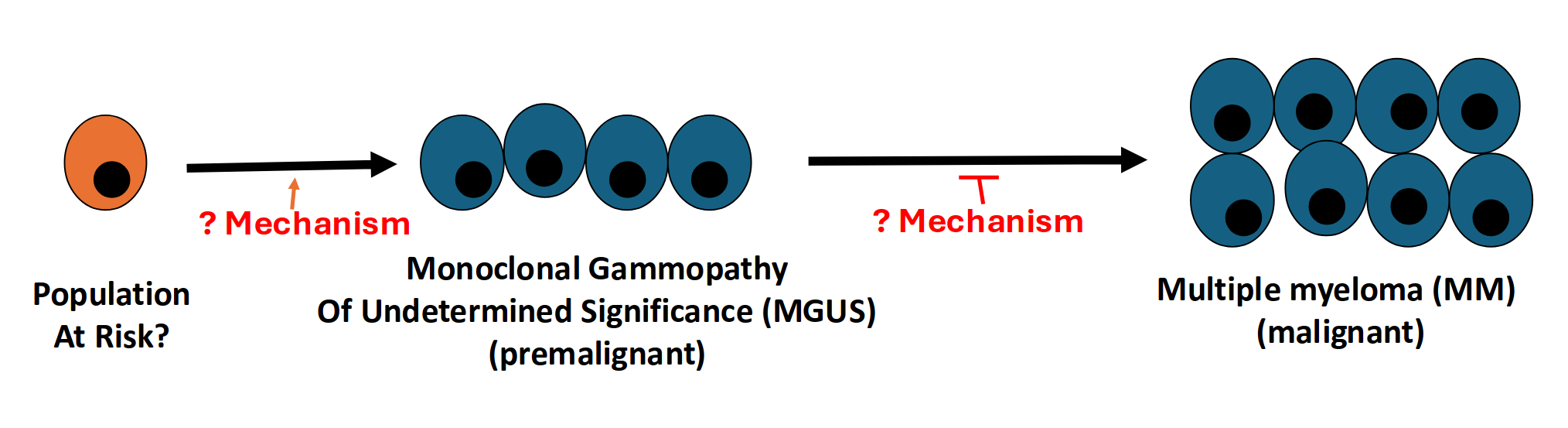
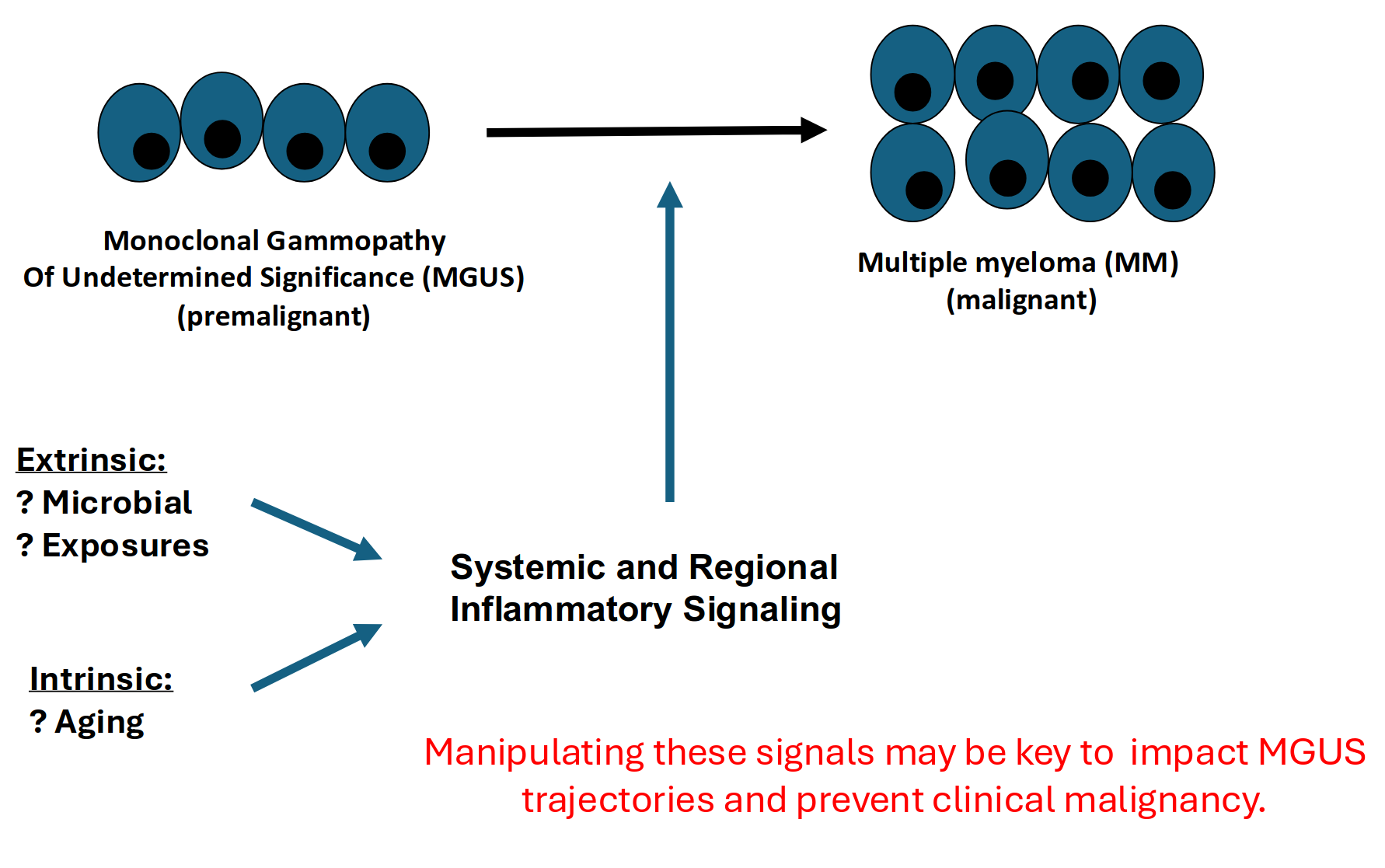
This collaborative research initiative investigates the transition of Monoclonal Gammopathy of Undetermined Significance (MGUS) into Multiple Myeloma (MM), a currently incurable plasma cell malignancy. While chronic inflammation and B cell activation are known precursors to MM, the specific environmental triggers have historically remained elusive.
This project, led by Drs. Dhodapkar, Flavell, and Palm, explores the hypothesis that specific commensal microbial species act as antigenic triggers for the B-cell receptors (BCRs) associated with human myeloma.
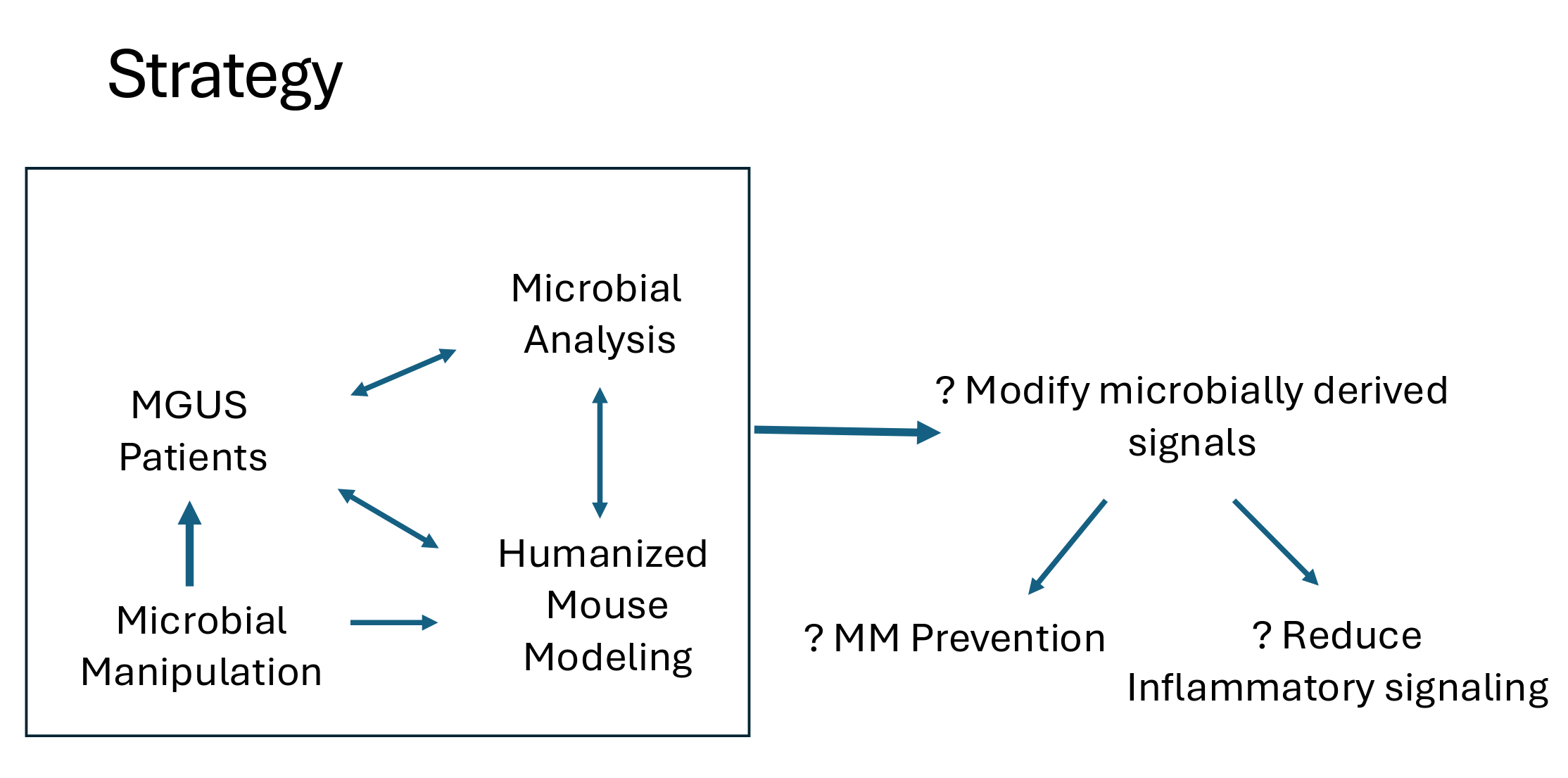
The research team utilizes a multi-disciplinary approach to define the causal relationship between the gut microbiome and plasma cell tumors:
Microbial Identification: Characterizing the full spectrum of human gut microbes that serve as antigenic triggers for MGUS and human B cells.
Mechanistic Validation: Utilizing proprietary humanized models to observe the in vivo interactions between the human immune system and microbial communities.
Clinical Intervention: Analyzing biospecimens from MGUS patients undergoing antibiotic treatment to evaluate the impact of microbial reduction on the inflammatory microenvironment.
Pathogenesis Mapping: Evaluating how microbial manipulation can disrupt the inflammatory signals that drive the progression from precursor states to clinical malignancy.
The application is supported by preliminary data identifying a specific commensal species that directly engages human MM-associated receptors. By shifting the focus toward immune-prevention, this study aims to move beyond reactive treatment of MM and toward proactive interception at the MGUS stage.
Beyond its direct application to Multiple Myeloma, this research holds significant potential for the broader fields of immunology and oncology. Insights regarding the interaction between specific microbes and human B cells may inform new strategies for:
Autoimmunity: Understanding how microbial triggers initiate aberrant B cell behavior.
Cancer Immunotherapy: Enhancing the efficacy of treatments by modulating the host microbiome.
Preventative Medicine: Establishing a framework for "microbial targeting" as a standard for preventing clinical cancer.